Artificial intelligence and energy are rapidly becoming one of the most consequential pairings of the modern economy. As climate change intensifies pressure on governments and industries to decarbonise, the power grid sits at the centre of the energy transition-and AI is emerging as one of its most powerful enablers.
The shift away from fossil fuels toward renewable energy is no longer optional. Yet integrating variable energy sources such as wind and solar into legacy power systems introduces volatility, complexity, and operational risk. Managing this transition at scale demands tools that can predict, optimise, and adapt in real time. This is where AI in energy systems is moving from experimental to essential.
Why AI Has Become Critical to Grid Stability
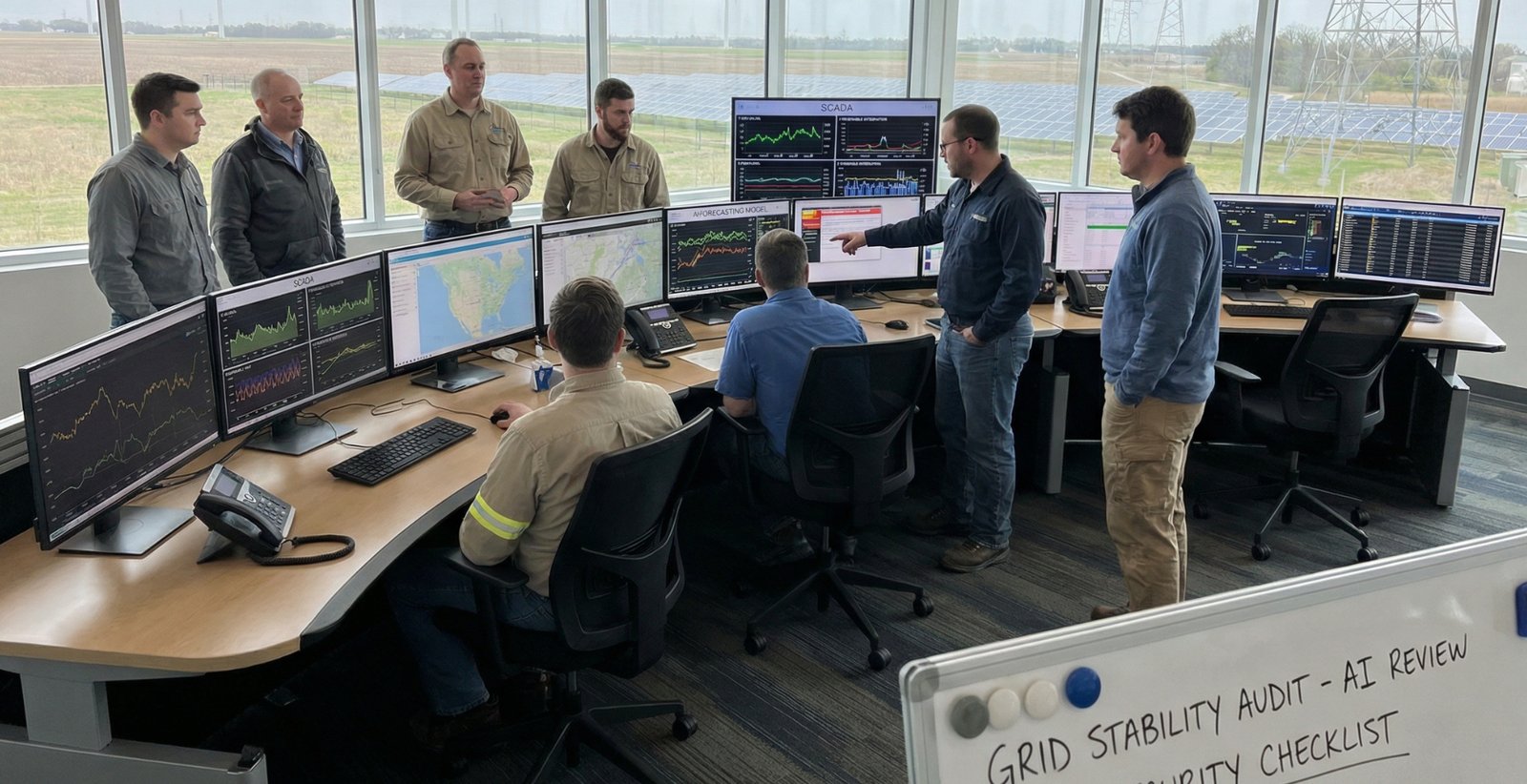
Modern power grids are generating unprecedented volumes of data through smart meters, sensors, automation systems, and digital twins. AI is uniquely suited to extract value from this data, enabling grid operators to:
- Forecast renewable generation and demand with greater accuracy
- Balance supply and demand in real time
- Reduce system imbalances and frequency deviations
- Anticipate faults and optimise maintenance schedules
For example, Belgium’s transmission system operator, Elia, has deployed AI-based forecasting tools that reduced system imbalance forecast errors by more than 40%, significantly improving grid stability as renewable penetration increased. Similar applications are being used globally to predict equipment failure, extend asset lifecycles, and improve resilience across transmission and distribution networks.
At an operational level, AI-driven fault detection and automated restoration strategies can dramatically reduce downtime-an increasingly critical capability as grids become more decentralised and exposed to extreme weather events.
AI on the Demand Side: Efficiency as a Competitive Advantage
AI’s impact extends beyond generation and transmission into energy consumption optimisation. Advanced energy management systems are now learning user behaviour, price signals, and weather patterns to dynamically reduce costs and emissions.
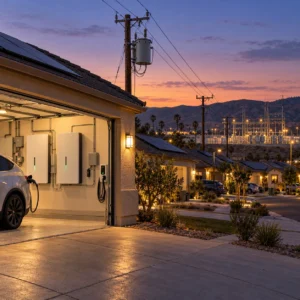
- AI-controlled electric vehicle charging systems are cutting electricity costs by up to 30% while aligning charging with local renewable generation.
- Industrial and commercial buildings are using AI to predict peak demand and avoid penalty charges.
- Utilities are leveraging AI to design more flexible tariffs and demand response programs.
For large energy consumers, these capabilities are quickly becoming a source of operational and financial advantage, not merely sustainability compliance.
The Strategic Risks Executives Cannot Ignore
Despite its promise, AI adoption in the energy sector comes with material risks that demand board-level oversight:
- Cybersecurity and data privacy, particularly under frameworks such as the EU Artificial Intelligence Act
- Opacity in AI decision-making, raising accountability and explainability concerns
- Environmental trade-offs, including the energy and water intensity of data centres and AI hardware manufacturing
- Regulatory complexity, as energy systems remain among the most tightly governed infrastructures
These factors complicate deployment decisions, especially given the systemic importance of energy security and grid reliability.
Will AI Solve the Energy Transition Alone?
AI is not a silver bullet. Fully autonomous power systems-where algorithms independently manage generation, storage, and consumption-remain a long-term ambition rather than an imminent reality. Progress will continue through incremental integration, combining AI capabilities with human oversight, robust governance frameworks, and cross-sector collaboration.
Recognizing both opportunity and risk, the European Commission is set to adopt a Strategic Roadmap in 2026 focused on digitalization and AI in the energy sector. The objective is clear: accelerate innovation while ensuring trust, security, and sustainability.
Read about Why Grid Modernization Is Central to Turkmenistan’s Energy Strategy
Executive Takeaway
The convergence of AI and energy is reshaping how power systems are planned, operated, and optimised. For C-level leaders, the question is no longer whether AI belongs in the grid-but how fast, how responsibly, and where it creates the greatest strategic value.
Those who treat AI as a core infrastructure capability-not a peripheral technology-will be best positioned to lead in a decarbonised, digitised energy economy.