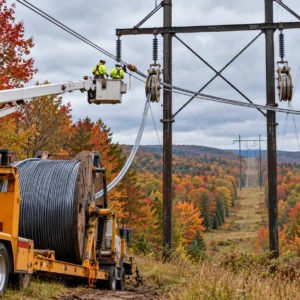
Long Island is getting a bigger door to the rest of the New York grid.
On September 17, the New York Public Service Commission approved the siting settlement for Propel NY Energy, a $3.26 billion, 90-mile underground transmission project developed by New York Transco and the New York Power Authority. The order grants the project a Certificate of Environmental Compatibility and Public Need. That is the main state approval a major line needs before it can move into construction planning.
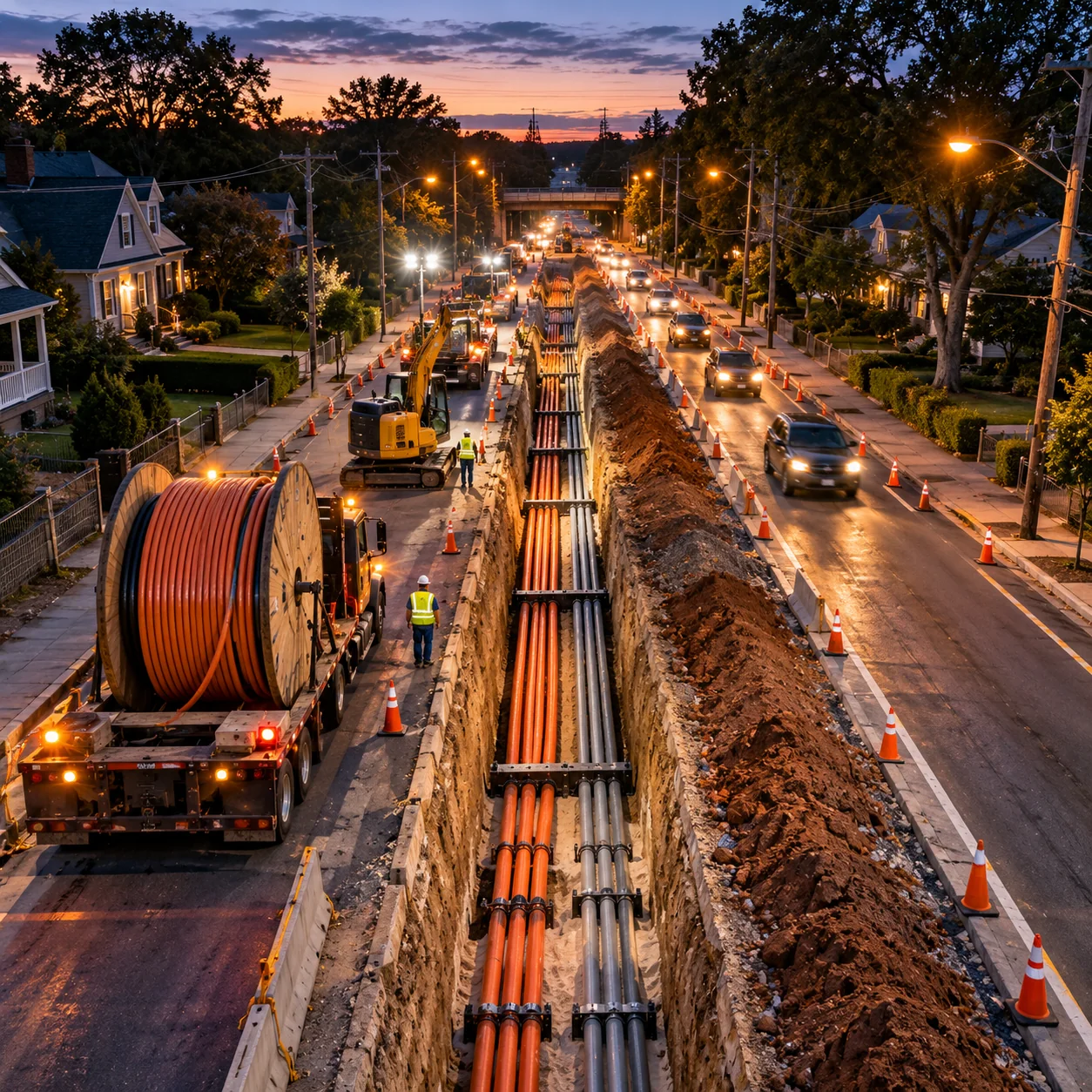
The line will run at 138 kV and 345 kV through Suffolk, Nassau, Queens, the Bronx and Westchester, connecting to nine existing or new substations. According to the Long Island Press, it includes roughly nine miles of submarine cable under Long Island Sound. The developers are aiming to finish in 2030.
In downstate New York, where demand is dense and there is little room to build, that is a meaningful step.
A Reliability Case That Survived a Hard Stretch for Offshore Wind
The New York ISO selected Propel NY in June 2023 through the state’s public policy transmission planning process. NYISO said at the time that the project would give the system enough transmission capability to deliver at least 3,000 MW from offshore wind. The plan adds three new underground cables linking Long Island to the rest of the state and a 345 kV backbone across western and central Long Island.
Since then, several offshore wind projects have been cancelled, and opponents argued that the line was no longer needed. The commission disagreed. In its order, as quoted by Utility Dive, the PSC said that “while it is true that the pace of offshore wind energy generation development has slowed … the need for the project continues to exist.” Regulators pointed to more than 1,800 MW of offshore wind already operating or under construction. They also noted that a 9 GW offshore wind goal for 2035 is still state policy, and so is the target of a zero-emission statewide electric system by 2040.
The more lasting point is in the finding itself. The Department of Public Service says the PSC concluded the project is necessary to maintain and enhance system reliability in New York City and Long Island.
That framing matters.
A line justified by a single generation source is exposed when that source stumbles. A line justified by reliability, and usable by many kinds of resources, holds its value whichever way the future goes.
Settlement, Not Stalemate, Got the Line Through
The order adopted a joint proposal signed by a wide group. It included New York Transco, NYPA, the Department of Public Service, the state Departments of Environmental Conservation, State, Agriculture and Markets, and Transportation, the City of New York and the Long Island Commercial Fishing Association. The Long Island Power Authority and PSEG Long Island supported the agreement.
That breadth is worth studying. Large transmission projects in dense areas tend to stall in contested siting fights. Here, state agencies, the city and a commercial fishing group reached terms that let regulators rule on an agreed record. PSC Chair Rory M. Christian said the commission “was presented with a thorough record demonstrating that this critical infrastructure project meets our statutory siting standards.”
Not every party is satisfied. Several North Shore communities and school districts have raised concerns, and Sea Cliff’s village administrator told the Long Island Herald that the village is weighing its next steps. Even so, the record was strong enough to carry the approval, and that is the part other developers should note.
Going Underground Is the Price of Building Downstate
Every mile of Propel NY runs underground or under water. That costs more than overhead construction. But overhead corridors of this length would be very hard to secure through Queens, the Bronx and the dense suburbs of Nassau and Westchester.
Burying the cable also brings a resilience benefit to a coastal region exposed to severe storms, because it keeps the conductors away from wind and falling trees. The developers say construction will proceed “in limited segments and phases,” which should help limit disruption on crowded streets.
The Certificate Is a Gate, Not a Groundbreaking
The PSC is still reviewing the project’s Environmental Management and Construction plans, which must be approved before work can fully start. The commission is taking public comment on those plans until October 1.
According to the developers, some work could begin later in 2026 “at discrete areas along the route,” with more comprehensive construction expected in mid-2027, pending the remaining approvals and permits. NYISO’s original in-service requirement for the project was May 2030.
For developers and utilities planning similar lines, Propel NY offers a practical playbook:
- Anchor transmission need in reliability, not a single resource type
- Bring state agencies, cities and affected industries into a settlement early
- Budget for undergrounding where overhead corridors do not exist
- Phase construction to keep community disruption contained
- Treat construction plans as a second approval gate, not a formality
A Public Power and Independent Developer Model Worth Copying
Propel NY pairs a state public power authority with New York Transco, an independent transmission company. In a joint statement, NYPA President Justin Driscoll and New York Transco President Joris Veldhoven called the certificate “a significant milestone for Propel NY Energy” and said the project would improve reliability and resiliency across the state.
That structure deserves attention beyond New York. In competitive public policy processes like NYISO’s, planners define a need and then choose the best answer from several bidders. When the winning team can carry that answer through siting with a broad settlement behind it, the process is doing what it was built to do.
Is a little over three years from selection to siting certificate fast?
For a $3 billion underground line through some of the most densely built ground in the country, this order suggests it is a pace other regions should be glad to match.
Offshore wind made the original case for Propel NY. Reliability is what carried it through approval.