
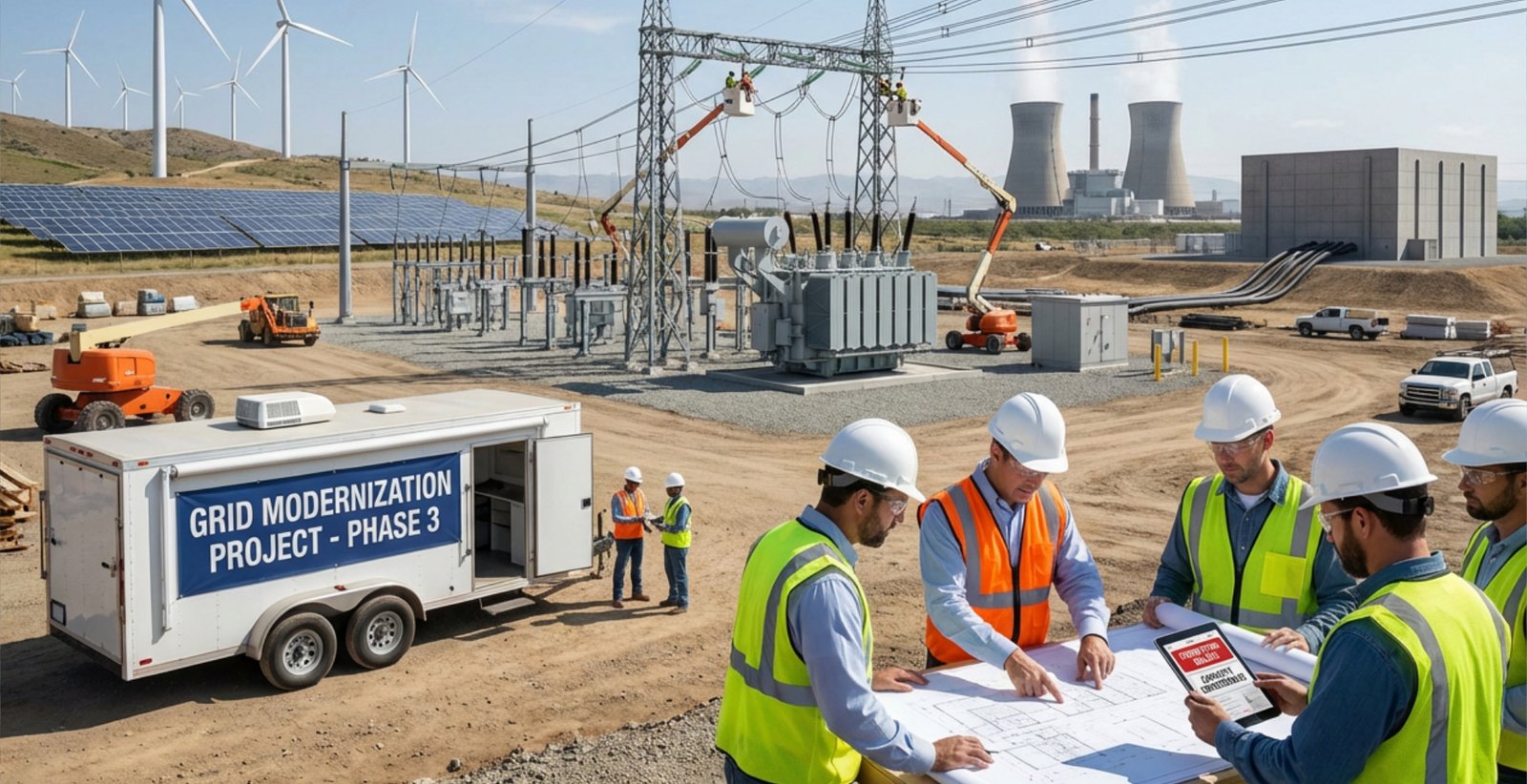
Global grid investment is on track to exceed $470 billion in 2025, marking the first time the world has spent this much on electricity transmission and distribution in a single year. This surge in spending reflects the central role of the grid in the energy transition, as countries race to connect new renewable generation, meet rising electrification targets, and power fast-growing demand from data centres and heavy industry.
For C-suite leaders in energy, infrastructure, finance, and technology, this milestone signals both a massive opportunity and a critical constraint: the grid is now the key enabler of decarbonisation, but persistent bottlenecks mean that even record investment may not be enough to keep pace with demand.
Double-Digit Growth Becomes the New Normal
Grid capital spending is set to grow by 16% in 2025, following 15% growth in 2024. This back-to-back double-digit expansion shows that rising grid investment is no longer a temporary spike-it is becoming an established feature of the global energy transition.
The drivers are clear:
- Renewable energy projects need new transmission lines and substations to reach the grid.
- Electrification of transport, heating, and industry is pushing up peak demand and requiring grid upgrades.
- Data centers, in particular, are submitting a flood of new connection requests, creating a surge in demand-side pressure on transmission systems.
Despite this growth, the increase in spending does not fully translate into proportional physical expansion of the grid. A portion of the higher figures is driven by rising equipment costs and inflation, which means that more dollars are being spent to deliver the same amount of new infrastructure.
Regional Leaders in Grid Investment
In 2025, the United States is the largest single market for grid investment, accounting for around $115 billion, or roughly a quarter of the global total. This reflects both the scale of the U.S. grid and the urgency of modernizing aging infrastructure while integrating large volumes of renewables and new demand.
China and the EU/UK are also major contributors, each representing about 20% of global grid spending. In these regions, investment is focused on:
- Long-distance transmission lines to move power from remote renewable zones to load centers.
- New high-voltage substations and high-voltage direct-current (HVDC) projects.
- Upgrades to distribution networks to support distributed generation and EV charging.
This regional concentration highlights where the most immediate opportunities and risks lie for investors, developers, and policymakers.
Transmission Outpaces Distribution
One of the most significant trends in the grid investment outlook is the accelerating shift toward transmission. Between 2024 and 2027, transmission grid investment is projected to grow at a compound annual growth rate of 16%, nearly twice as fast as distribution, which is expected to grow at around 9%.
This divergence is driven by:
- The need for long-distance connections to bring offshore wind, remote solar, and large-scale wind farms to demand centers.
- The construction of new high-voltage substations and HVDC links to improve grid stability and cross-border power flows.
- The rising number of large, centralized demand projects-especially data centers and industrial facilities-that require direct access to high-capacity transmission.
While distribution investment remains higher in absolute terms today, the faster growth in transmission suggests that the balance could shift before the end of the decade, reshaping how utilities and investors allocate capital.
Generation and Demand Queues Remain Overloaded
Despite years of reform efforts, connection queues for new generation remain oversized in most markets. Now, demand queues are also rising rapidly, as transmission grids receive a major increase in connection requests from companies that need large amounts of power.
Key pressure points include:
- Data centers, which are driving sharp increases in power demand and submitting a wave of new connection applications.
- Industrial electrification, where factories, refineries, and heavy industries are switching from fossil fuels to electricity, often at scale.
- Green hydrogen and e-fuels projects, which require dedicated, high-capacity connections to produce clean fuels at commercial scale.
These queues mean that even with record investment, delays to new generation and demand connections are likely to continue in the coming years. For executives, this creates a clear risk: projects that are technically and economically viable may be held back by grid availability, affecting timelines, financing, and returns.
Barriers to Faster Grid Expansion
Several structural barriers are limiting the pace of grid expansion, even as investment rises:
- Supply chain and labor constraints
Some transmission and distribution companies are struggling to meet their business goals due to delays in equipment delivery and a shortage of specialized engineering and construction talent. - Permitting and licensing delays
Lengthy approval processes for new lines, substations, and rights-of-way remain a major bottleneck, particularly in densely populated or environmentally sensitive areas. - Regulatory and financial disincentives
In many markets, operating expenses for the grid are passed directly to consumer bills with no additional profit for the grid company. This often discourages investment in grid-enhancing technologies (GETs) that could unlock more capacity from existing infrastructure. - Slow adoption of innovative technologies
Investment in advanced solutions-such as dynamic line ratings, advanced power flow control, and AI-optimized smart-grid software-is growing, but utilities still tend to favor traditional, capital-intensive projects over newer, more flexible options.
Europe’s push to accelerate grid permitting and approvals read more
Financing the Grid of the Future
Debt capital remains the primary vehicle for financing grid investment, but in some markets, borrowing is approaching levels where injections of new equity capital are needed to keep balance sheets healthy. This shift has important implications for investors and regulators:
- In regulated markets, grid companies may need new regulatory frameworks that allow them to earn a return on grid-enhancing technologies, not just on new wires and substations.
- In liberalized markets, there may be growing opportunities for private capital to participate in grid upgrades, particularly in transmission and cross-border interconnectors.
- For project developers, the financing landscape means that grid connection risk must be explicitly factored into project economics, with clear plans for timing, costs, and potential delays.
What C-Suite Leaders Should Do Next
For executives in energy, infrastructure, finance, and technology, the $470 billion grid investment milestone demands a strategic response:
- Factor grid constraints into project planning
Treat grid availability and connection timelines as a core risk, not an afterthought. Build realistic schedules and contingency plans for delays in both generation and demand projects. - Engage early with grid operators and regulators
Proactively engage with transmission and distribution companies, regulators, and policymakers to understand queue positions, upgrade plans, and permitting timelines. - Prioritize grid-enhancing technologies
Evaluate and invest in solutions like dynamic line ratings, advanced power flow control, and AI-driven grid optimization to maximize the capacity of existing infrastructure. - Align with data center and industrial electrification trends
For companies in tech, manufacturing, and heavy industry, plan for rising power demand and ensure that site selection and expansion strategies account for grid capacity and connection timelines. - Advocate for regulatory reform
Support policy changes that incentivize timely grid expansion, streamline permitting, and allow utilities to earn returns on innovative, capacity-unlocking technologies.
Looking Ahead
The fact that global grid investment is set to top $470 billion in 2025 is a clear sign that the world is serious about the energy transition. The grid is no longer a background utility-it is the central nervous system of the low-carbon economy.
For C-suite leaders, the key insight is this: record spending alone will not solve the grid bottleneck. Success will depend on how quickly companies, investors, and governments can overcome permitting, supply chain, and regulatory barriers to deliver the physical infrastructure that the energy transition urgently needs.