California has stopped treating home batteries as a side program.
On September 30, 2026, Governor Gavin Newsom signed SB 905 and SB 913, two bills by state Senator Josh Becker that give virtual power plants a formal job on the state’s grid. According to Canary Media, the signatures came after Newsom vetoed three virtual power plant bills in 2025, which made the outcome a surprise even to the author. “We’re kind of shocked that he signed both bills,” Becker told the publication.
The pairing matters. One law tells utilities to measure how hard they actually work the wires customers already pay for. The other tells regulators to pay customer devices for relieving those wires when demand peaks. Together they give planners a cheaper option to weigh against new poles, conductors and gas peakers.
Two Laws Aimed at One Problem: Paying for Peaks
California’s affordability pressure is the backdrop. Canary Media reports that residential rates at the state’s three major investor-owned utilities have risen to roughly twice the U.S. average over the past decade. Much of that cost traces to building and maintaining capacity that sits idle outside a handful of hot summer evenings.
SB 913 goes after the supply side of that peak. Solar Power World reports that it removes restrictions that have limited customer batteries from bidding into the wholesale energy market. It also directs the California Public Utilities Commission to set a valuation method for customer batteries that export power during grid stress, so they can count toward resource adequacy based on the full energy they can dispatch.
SB 905 goes after the demand side. It establishes a grid utilization metric for each segment of the distribution grid, showing which circuits could carry more energy if usage shifts to off-peak hours, and gives the CPUC a path to require utilization to improve each year, according to Solar Power World. Canary Media adds that the law tightens the profit rate utilities can earn on wildfire spending and requires them to borrow more to fund a larger share of grid investments.
Utilization Becomes a Number Regulators Can Track
For distribution planners, SB 905 is the quieter but more structural change.
Utilities have long justified upgrades by pointing to peak load forecasts. A circuit level utilization metric puts a second figure next to that forecast: how much of the existing capacity is used across the rest of the year. A feeder that hits its limit for a few hours but runs well below it most of the time becomes a candidate for load shifting before it becomes a candidate for a rebuild.
That changes the conversation in rate cases.
The Cool Down, summarising the package, notes that more accurate measurement could weaken arguments for costly overbuilding and favour cheaper options such as batteries and demand shifting. Becker framed the test plainly to Canary Media: “And if they can’t deliver in a cheaper fashion, they won’t be used.”
A Battery Fleet Already Sitting on Garage Walls
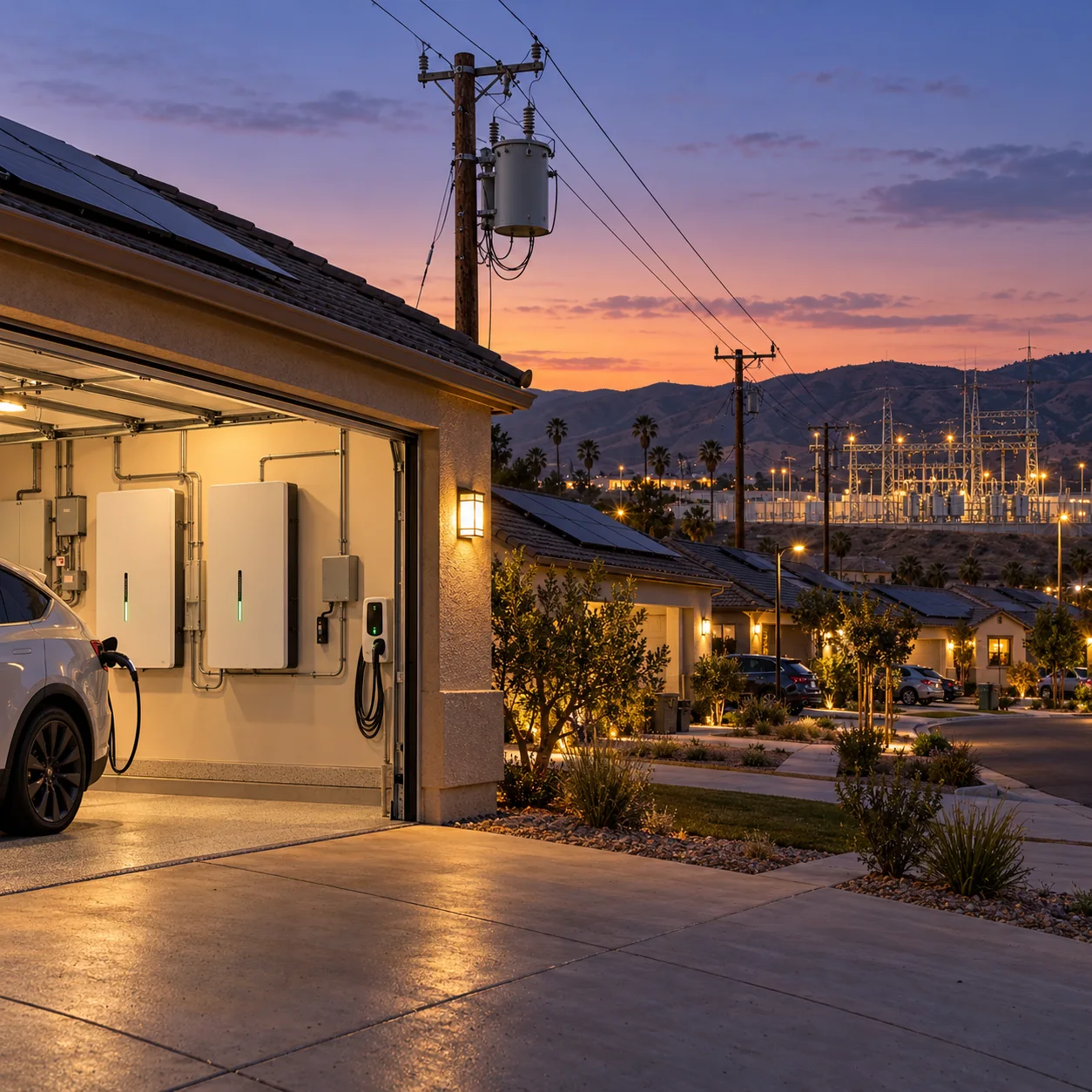
The resource SB 913 wants to tap is already installed. Solar Power World reports that more than 300,000 California customers have installed solar charged batteries, with about 2,000 more added every week. Becker described the aim as putting to work the “millions of batteries, electric vehicles, smart thermostats, and other technologies” Californians already own.
Advanced Energy United estimates the resource adequacy pathway in SB 913 could open “potentially hundreds of megawatts” of capacity. The law requires the CPUC to work with the California Energy Commission and the California Independent System Operator on market pathways for aggregated distributed resources to qualify as resource adequacy.
Industry groups read the bills as a cost tool first. “Resources installed on garages and campuses can provide energy cheaper than building new power lines,” Brad Heavner, executive director of the California Solar and Storage Association, said in comments reported by pv magazine USA. Stephanie Doyle of the Solar Energy Industries Association said SB 913 “will modernize rules to allow aggregated distributed energy resources to help stabilize the grid.”
Transmission and Cost Controls Ride Along
The virtual power plant bills were part of a wider affordability package. Canary Media reports that Newsom also signed AB 2493, which requires the CPUC to monitor delayed transmission projects and take remedial action if they fall behind schedule, and SB 1098, which limits utilities’ use of balancing and memorandum accounts for hard to forecast costs.
Mark Toney, executive director of The Utility Reform Network, told Canary Media that “making sure that utilities don’t overspend” is the shared goal of SB 1098 and SB 905. His organisation sponsored seven bills in the session, and all of them became law.
The result is a package that pushes on cost from several directions at once: tighter oversight of big transmission builds, closer scrutiny of utility accounting, and a market route for small resources that can defer some of that spending.
What Utilities and Aggregators Should Watch Next
The statutes set direction. The CPUC rulemakings will set value.
Heavner put it directly in comments reported by The Cool Down: “Implementation of the bill at the CPUC under the next governor will determine whether customers see lower bills.” For the companies that will build, operate and contract with these fleets, the details to track include:
- How the CPUC defines and publishes circuit level utilization data
- Whether annual utilization improvement targets carry financial consequences
- The valuation method for exported battery energy during grid stress
- Telemetry and performance rules for aggregated resources seeking resource adequacy credit
- How CAISO market rules treat aggregations bidding into wholesale markets
- Whether utility capital plans begin to cite flexibility as an alternative to upgrades
Other states are watching the same pressures build. California’s approach offers a template that pairs a measurement duty on the utility with a payment route for the customer, rather than relying on pilots that sit outside the planning process.
The batteries are already on the walls. California has now written down what they are worth to the grid.