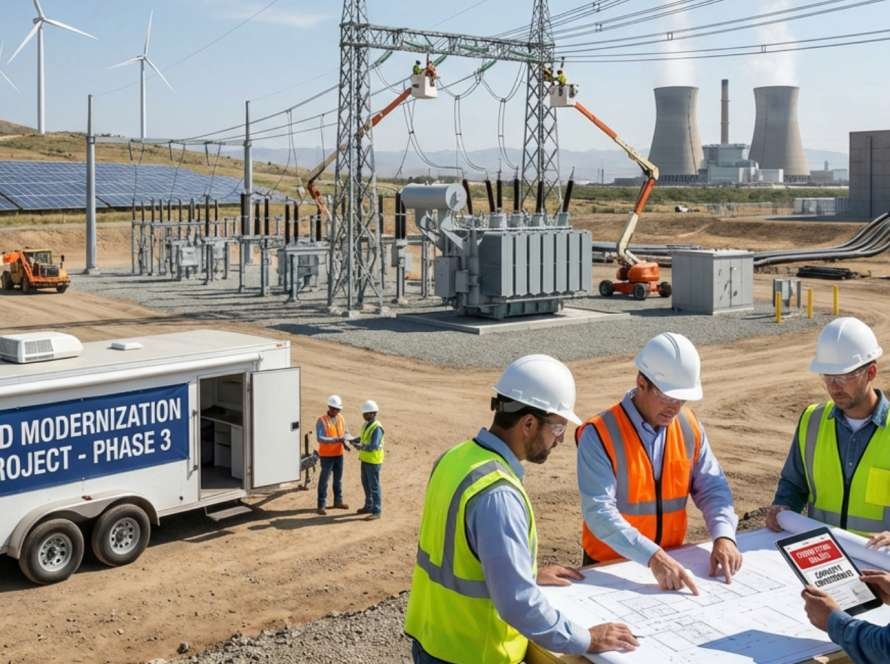
Power grid modernization has emerged as a strategic imperative for nations seeking energy security, economic resilience, and regional competitiveness. In Turkmenistan, this transformation is now gaining momentum through a landmark $500 million investment by the Asian Development Bank (ADB)-the first major engagement by an international financial institution in the country’s electricity sector.
Since 2018, ADB has partnered with Turkmenistan to execute the National Power Grid Development Strategy, a multi-year initiative designed to modernize aging infrastructure, enhance system reliability, and significantly expand electricity export capacity. For government leaders, utilities, and investors, the project represents a decisive move toward a more robust and future-ready energy system.
Building the Backbone of a Modern Power Grid
At the core of the program is large-scale transmission infrastructure development. The project has financed the construction of approximately 1,400 kilometres of high-voltage transmission lines operating at 110 kV, 220 kV, and 500 kV, along with 11 new substations strategically deployed across Akhal, Balkan, Dashoguz, Lebap, and Ashgabat.
These investments directly address one of the most critical challenges facing national grids: system stability at scale. By strengthening long-distance transmission and upgrading substations, Turkmenistan is laying the groundwork for a more resilient power network capable of supporting industrial growth, cross-border trade, and future energy diversification.
Complementing physical infrastructure, ADB has provided $1.5 million in technical assistance, funded by the Japan Fund for Prosperous and Resilient Asia and the Pacific. This support focuses on planning, operational efficiency, and institutional capacity-elements that are essential for sustaining performance well beyond the project’s completion.
Read about: Why North America’s Power Grid Must Become More Resilient
Measurable Impact on Energy Exports and Reliability
The results are already tangible. According to ADB data, electricity exports increased from 3.4 terawatt-hours in 2017 to 9.3 terawatt-hours in 2023, nearly tripling in just six years. This growth reflects improved grid reliability, higher transmission capacity, and greater confidence among regional energy buyers.
The State Electric Power Corporation Turkmenenergo, ADB’s local partner, has played a pivotal role in implementation, contributing $175 million toward the project. This level of domestic commitment underscores the strategic importance of grid modernization as a national priority rather than a standalone infrastructure upgrade.
A Broader Development Partnership
ADB’s role in Turkmenistan extends beyond electricity infrastructure. In September 2025, the bank approved a $75 million loan and a $2 million grant to strengthen the country’s nursing and midwifery workforce-its first project in the health sector. Together, these initiatives signal a broader partnership focused on long-term economic development, institutional capacity, and social resilience.
Executive Takeaway
For C-level leaders, the message is clear: modern power grids are not just engineering projects-they are economic enablers. Turkmenistan’s collaboration with ADB demonstrates how targeted investment in transmission, substations, and system governance can rapidly translate into export growth, improved reliability, and stronger regional positioning.
As energy systems across Asia and beyond face rising demand, climate pressures, and geopolitical complexity, power grid modernization will continue to define which economies lead-and which are left behind.