Executive Brief
Extreme weather events are no longer edge cases for power systems—they are defining stress tests. From Winter Storm Uri in Texas to Hurricane Ida along the U.S. Gulf Coast, recent disruptions have exposed the vulnerability of aging distribution networks and underscored the urgency of data-driven grid modernization.
Leading utilities and system planners are now shifting from reactive restoration toward predictive resilience, using high-resolution data, advanced analytics, and flexible grid architectures to strengthen distribution systems before failure occurs.
Why the Distribution Grid Is the Front Line
More than 90% of power interruptions originate in the distribution system—the lower-voltage lines, transformers, and poles that deliver electricity directly to customers. These assets are most exposed to:
- High winds and falling vegetation
- Extreme temperatures
- Flooding, snow load, and wildfires
When distribution assets fail, the impact cascades rapidly—disrupting heating and cooling, medical equipment, water treatment, telecommunications, and emergency services.
For executives, the message is clear: grid resilience is no longer optional infrastructure hardening—it is core risk management.
Using Data to Reveal Hidden Vulnerabilities
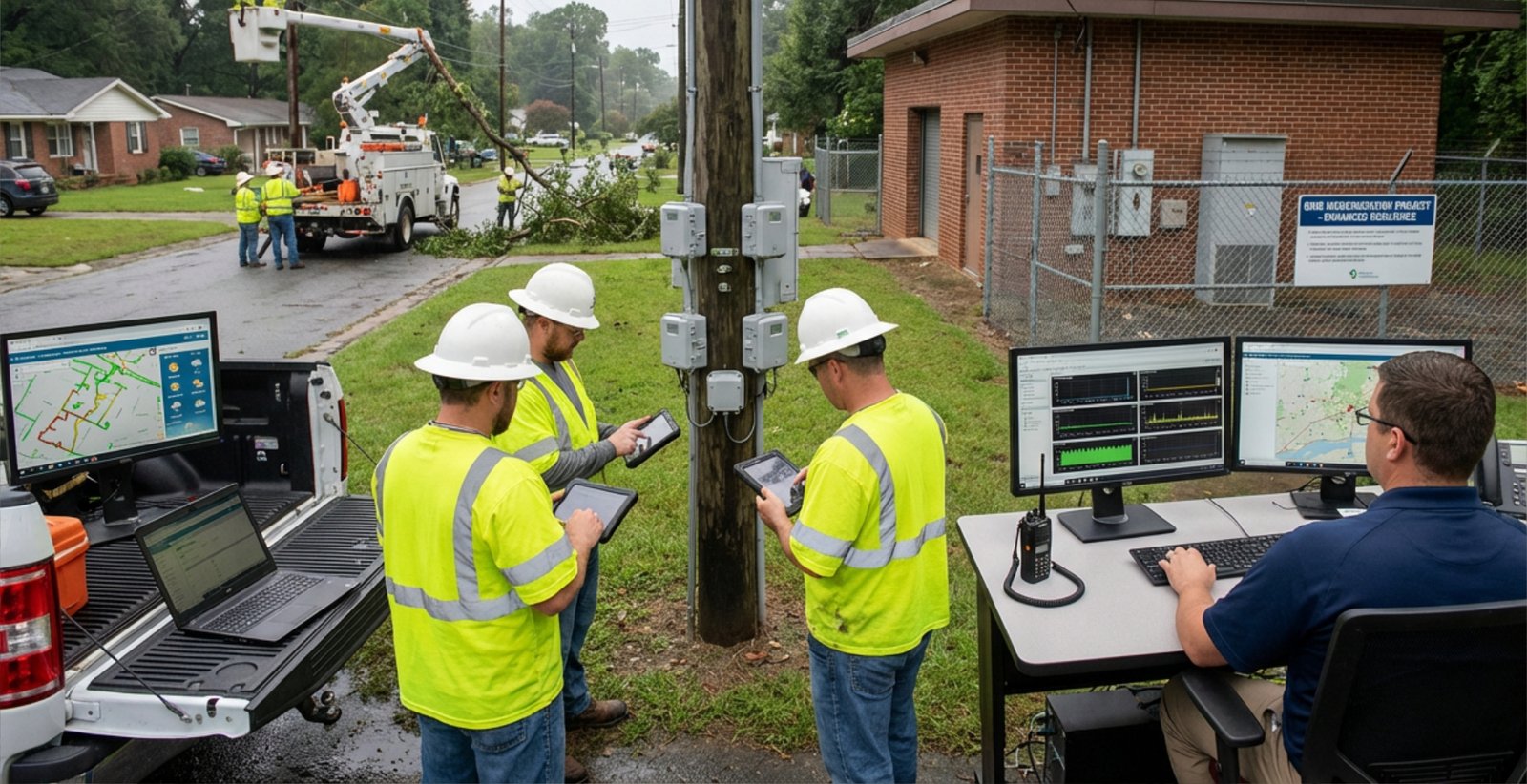
Advanced grid planning teams are now leveraging high-resolution operational and environmental data to understand how distribution networks behave during extreme events.
By analysing historical outage data alongside weather conditions, planners can:
- Identify recurring failure points at the feeder level
- Quantify outage duration and frequency under specific conditions
- Detect systemic weaknesses that traditional planning overlooks
In one example, analysis of high-wind events in rural Minnesota revealed a single distribution feeder accumulating more than nine weeks of outage time in one year—a finding that fundamentally changed investment prioritization.
This level of insight enables utilities to move from generalized hardening to targeted intervention.
From Insight to Action: Smarter Grid Solutions
Once vulnerabilities are identified, utilities can deploy tailored resilience strategies, including:
Physical Infrastructure Solutions
- Undergrounding power lines where economically viable
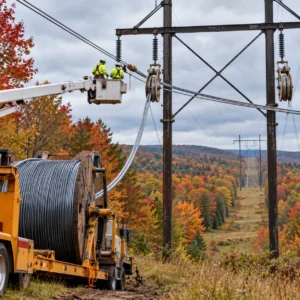
- Reinforcing poles and structures in high-risk corridors
Operational and Digital Strategies
- Advanced switching operations to reroute power dynamically
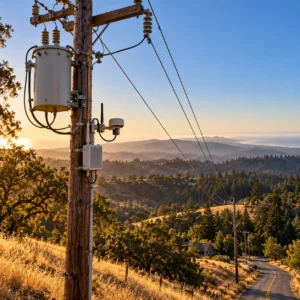
- Remote sensors for real-time fault detection
- Distributed energy resources and microgrids to sustain critical services
No single solution fits all contexts. Urban systems benefit from network redundancy and automation, while rural systems require different trade-offs due to distance, terrain, and cost constraints.
Quantifying Value, Not Just Resilience
Modern grid investment decisions demand measurable returns, not just theoretical reliability gains. Data-driven planning allows utilities and regulators to:
- Compare cost versus outage reduction across solutions
- Prioritize investments with the highest resilience impact
- Align capital spending with public safety and regulatory goals
For example:
- Undergrounding may be optimal in storm-prone corridors
- Switching operations may outperform physical upgrades in dense urban networks
- Distributed energy solutions may provide the fastest resilience gains for critical facilities
This evidence-based approach ensures that resilience investments are both defensible and scalable.
Strategic Implications for Energy Leaders
For C-suite executives, grid modernization is evolving into a strategic leadership issue, not a technical sidebar.
Key takeaways include:
- Distribution resilience is the weakest—and most impactful—link
- Extreme weather risk must be modelled, not assumed
- Data-driven planning reduces uncertainty in capital allocation
- Grid flexibility is now as important as grid capacity
As electrification accelerates and climate volatility increases, resilient distribution systems will define public trust, regulatory confidence, and operational continuity.
The Leadership Opportunity
The transition to a more resilient grid will not be achieved through incremental upgrades alone. It requires:
- Cross-sector collaboration
- Shared data frameworks
- Alignment between utilities, regulators, governments, and research institutions
Organizations that invest early in data-driven grid modernization will be better positioned to protect communities, control costs, and sustain reliability in an increasingly uncertain operating environment.
Rising storm intensity and accelerating grid stress read more